Blog | March 31, 2026
AI in warehousing
Where it creates value today – from yard to outbound

AI-supported planning, decision-support tools and vision-enabled systems are already part of everyday operations – improving planning accuracy, speeding up execution and helping teams cope with increasing operational volatility.
Expectations, however, remain high. Not every initiative delivers the results organizations expect. In practice, AI projects often stall after initial pilots or remain confined to individual sites. In many cases, challenges stem from data quality issues, system integration or a mismatch between the solution and operational reality on the warehouse floor.
A more productive discussion starts with a simple question: where is AI an effective value driver and where does it fall short?
This blog takes an end-to-end view of intralogistics, examining how AI is applied across four core warehousing areas: yard management, receiving, warehouse execution and outbound operations. For each, we highlight practical examples delivering value along with the operational considerations needed to scale them. The focus is deliberately practical and grounded in operational reality.

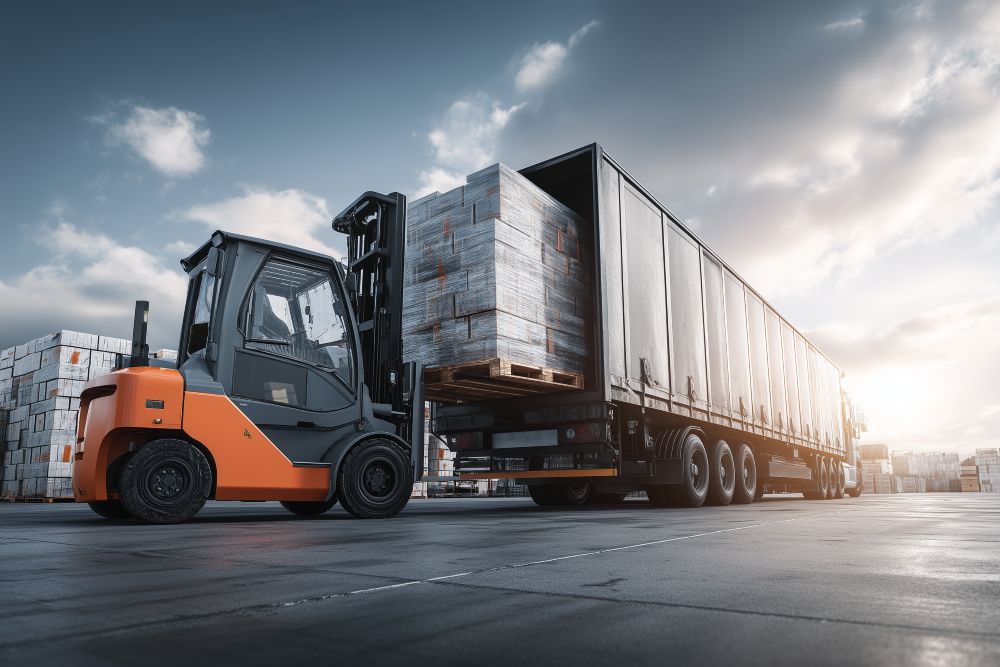
1. AI in warehouse yard management: improving dock flow and trailer visibility
Yard operations rarely receive the same attention as warehouse automation, yet they strongly influence overall performance. Congestion at the gate, limited visibility into trailer positions or slow dock coordination can quickly affect throughput and service levels inside the facility.
Traditional yard management relies heavily on manual coordination and fixed rules. While this provides a basic level of control, it leaves limited flexibility to respond to variability. AI-supported solutions help close that gap by increasing visibility, reducing repetitive coordination tasks and enabling more adaptive decision-making.
2. AI in warehouse receiving: streamlining inbound data accuracy and dock-to-stock efficiency
Receiving is the interface between physical flows and information systems. When inbound data is incomplete or inconsistent, the effects are immediate and inventory discrepancies increase. Planners then lose trust in system data and overall performance suffers.
AI’s main contribution is streamlining inbound workflows by making shipment information usable and verified before goods move past the dock.

3. AI in warehouse execution: optimizing picking, labor planning and task coordination
Putaway, picking and replenishment account for a large share of warehouse operating costs. While automation is important, today's warehouse operations are coordinated by systems such as a warehouse management system (WMS), warehouse control system (WCS) or warehouse execution system (WES). AI’s real strength is providing intelligent input into these systems to better coordinate work across people and equipment.
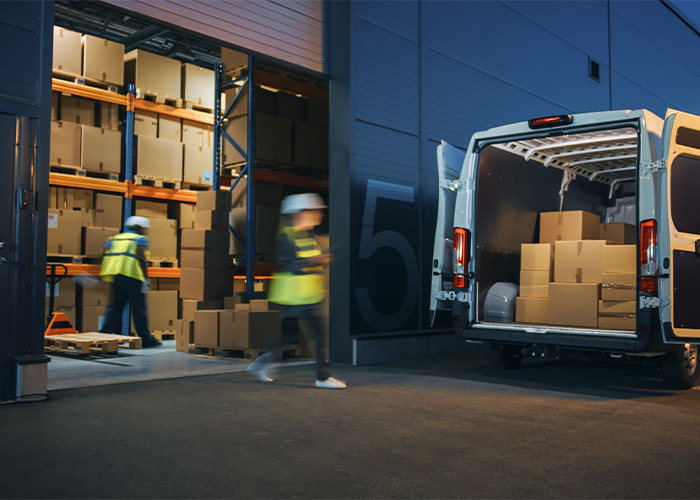
4. AI in outbound warehouse operations: advancing packaging, palletization and sortation
Some outbound operations involve a high degree of automation already. AI tends to create the most value in environments with high order variation, tight service requirements, high throughput and frequent operational changes.
Staging and loading often remain rule driven inside the WMS, so AI’s biggest outbound impacts show up earlier – packout, palletization and sortation – unless the WMS/WES exposes the right decision hooks for sequencing and exception handling.
Conclusion: applying AI with operational realism
AI is not a universal solution for every intralogistics challenge. Its effectiveness depends on stable processes, reliable data and thoughtful integration into existing systems and processes.
Across intralogistics functions, a consistent pattern emerges:
- Document automation and planning deliver immediate value today
- Computer vision and robotics perform best in structured environments
- Orchestration across people, systems and automation creates the largest and most sustainable gains
Organizations that take a pragmatic approach–focusing on specific use cases and building on strong foundations–are best positioned to move from pilots to lasting improvements. In intralogistics, AI creates value not by replacing operations but by increasing efficiency, visibility and utilization.
Closing thought
When deciding to invest in AI systems, organizations must have a clear view of their current operating model, data readiness and integration landscape. Understanding which use cases are realistic today – and which require further foundational work – helps avoid stalled pilots and misaligned investments.
At 4flow, we help companies assess intralogistics maturity, identify high-impact AI use cases and define pragmatic roadmaps aligned with operational realities. A structured, use-case-driven assessment is often the most effective starting point for translating AI potential into measurable performance improvements.
Ready to create value with AI in your warehouse operations?