Blog | May 20, 2026
Agentic AI and the future of warehousing
Automate workflows, optimize processes and build a highly resilient supply chain
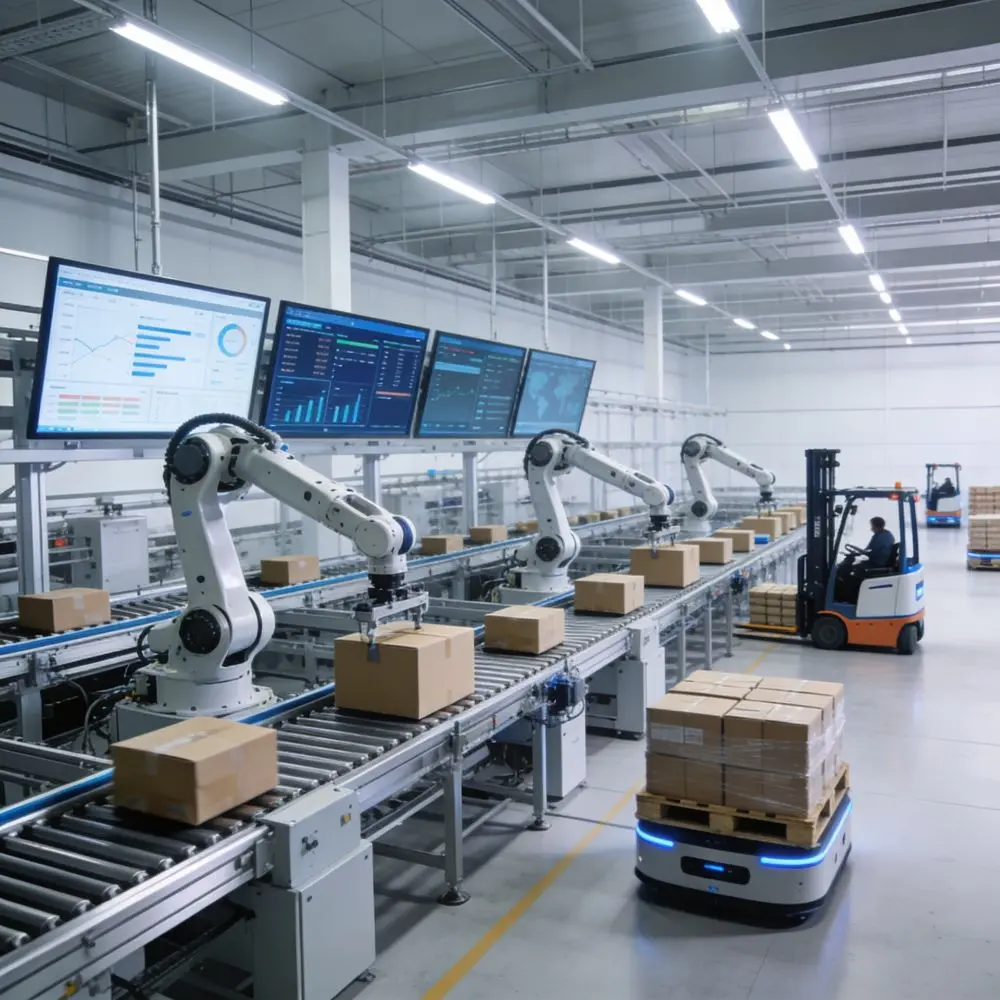
Does your current Warehouse Management System (WMS) actively prevent issues before they occur, or does it simply alert your team after the fact? For many organizations, legacy systems act as passive data recorders, leaving the heavy lifting of problem-solving to supervisors and operators on the floor.
What if your system could actively guide users, optimize processes, suggest actions and execute processes directly? The next major leap in supply chain technology introduces exactly that.
Agentic AI shifts your software from a reactive tool to a proactive partner, utilizing a seamless "Detect, Decide, Act" framework.
A new standard of interaction
The transition to autonomous logistics operations requires a fundamental shift in how users interact with supply chain systems. Instead of navigating complex menus and running manual reports, teams can leverage natural language processing (NLP) to communicate directly with your WMS.
SAP Joule introduces a new standard of interaction that relies on intent-based commands. This AI-driven solution proposes specific actions and executes them seamlessly, accelerating daily workflows.
Understanding SAP Joule skills and agents
To maximize the benefits in your supply chain, it helps to understand how intelligent systems categorize tasks. SAP Joule utilizes a combination of deterministic skills and probabilistic agents to handle different types of warehouse challenges.
Joule skill (Deterministic):
- This functions under the premise of "Tell me exactly what to do, and I will do it."
- You use a skill when the problem, the path and the solution are all known.
- Highly efficient for standard, repeatable processes.
Joule agent (Probabilistic):
- Operates on the premise of "Tell me the problem, and I will find the best way to solve it."
- You use an agent when the problem is known, but the path and solution are initially unknown or only partially known.
- Evaluates real-time data to determine the optimal resolution.
By orchestrating hybrid solutions, your WMS can leverage both skills and agents to manage standard operations and unexpected exceptions with equal precision.
Agentic workflow orchestration
To fully grasp the power of Agentic AI, you need to understand the architecture of workflow orchestration. This system connects physical events on the warehouse floor to immediate digital actions within your WMS.
The orchestration process flows through several key stages:
-

Triggers and signals
The system constantly ingests data from your environment. These signals include scanned barcodes, read documents, photos, video feeds, sensor data events and user chats.
-

AI orchestration layer
Once a signal is received, the AI orchestrator steps in. It deploys specialist agents equipped with specific skills (workflows and checks) and tools (Large Language Models and APIs) to evaluate the situation.
-
Outcomes
The system automatically executes the necessary response. This includes posting updates, executing tasks, conducting audits, generating documentation, maintaining an audit trail and providing KPI feedback.
Crucially, this entire process maintains strict observability. You retain complete control through defined roles and authorizations, human-in-the-loop oversight, real-time monitoring, and comprehensive auditing capabilities.
Case study: managing damaged goods
To see this concept in action, let’s look at a common warehouse exception: damaged inbound freight.
In a traditional setup, a worker spots a damaged box, stops their current task, manually logs the damage into the system, alerts a supervisor and moves the box to a quarantine area. This manual exception handling interrupts the process flow and relies heavily on the worker's experience.
With Agentic workflow orchestration, the process is automated:
1. Trigger (Detect):
A vision-enabled camera automatically detects damage on a box as it moves down the conveyor.

2. AI orchestration layer (Decide):
The system routes this visual signal to the inbound exception orchestrator, which activates the "Damaged box agent."
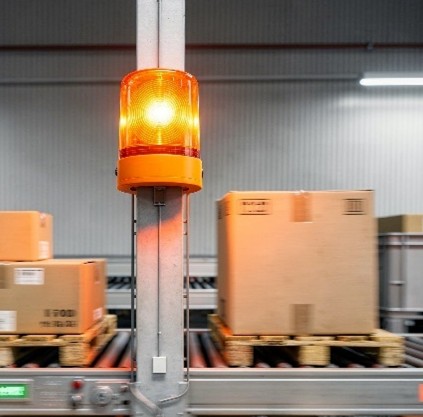
3. Action in the WMS (Act):
The Agent autonomously creates a damage case in the system, routes the specific box to quality control (QC), assigns an inspection task to the appropriate worker and notifies the warehouse supervisor of the event.

The system handled the detection, the decision, and the subsequent actions instantly, keeping your main inbound flow moving smoothly.
Make the shift to autonomous warehousing today
The potential for cost savings and efficiency gains in warehouse execution is significant. To capture these benefits, organizations need to adapt to three fundamental shifts in supply chain technology:
- AI becomes a new interface: Interaction with supply chain systems is fully supported by AI, streamlining user onboarding and reducing the dependence on deeply experienced legacy users.
- Agentic workflows enter operations: Autonomous decision-making becomes a reliable part of daily workflows, eliminating manual exception handling.
- Data becomes active capital: Companies need to move from simply storing historical data to actively using it to drive immediate, automated actions on the warehouse floor.
You can ensure successful implementation of these technologies by partnering with a recognized industry expert.
This blog is based on the presentation delivered by the author at LogiMAT in March 2026.
Get in touch with us to discover more.
4flow brings extensive expertise to optimize your warehouse and transportation processes. Combined with deep SAP digital supply chain knowledge, 4flow streamlines your operations to reduce costs and improve customer satisfaction.